
Best History Books for Beginners
This shelf is for readers who want to learn history without getting buried in dense academic structure on page one.
Top pick
1776
Unlike broad surveys, McCullough narrows to a single year and uses vivid anecdote and contemporary documents to make soldiers and commanders feel real.
Check current price and availability on Amazon.
Buy Now on Amazon#2 pick
Sapiens
Unlike timeline-only overviews, this book builds a few central theories — such as shared myths and revolutions — and uses them to interpret many eras and examples across human history.
Check current price and availability on Amazon.
Buy Now on Amazon#3 pick
Sex with the Queen: 900 Years of Vile Kings, Virile Lovers, and Passionate Politics (P.S.)
Unlike political histories that focus only on battles or laws, this book centers on personal relationships—mistresses, royal marriages, and court gossip—as drivers of historical change.
Check current price and availability on Amazon.
Buy Now on Amazon#1
Top pick1776
David McCullough tells the story of the year 1776 with a focus on George Washington’s leadership and the Continental Army’s struggles to hold together amid defeats and low morale.
Best for readers who want a clear, narrative account of the Revolutionary War year centered on Washington rather than a dense political analysis.
Why it made the list
- McCullough draws on letters, diaries, and eyewitness reports to recreate Washington’s challenges at New York and the desperate retreat across New Jersey.
- The book brings British commanders and their plans into view too, so you see the military balance and why the early American cause looked so fragile.
Unlike broad surveys, McCullough narrows to a single year and uses vivid anecdote and contemporary documents to make soldiers and commanders feel real.
Check current price and availability on Amazon.
Buy Now on Amazon Read more about 1776#2
Top pickSapiens
Harari tells the story of Homo sapiens from hunter-gatherers to the modern world, arguing that three major revolutions — cognitive, agricultural, and scientific — changed how people cooperate, believe, and build power.
Best for readers who want a wide-angle, idea-driven history that connects biology, culture, and economics in clear, story-like chapters will enjoy this book.
Why it made the list
- Harari uses the Cognitive Revolution idea to explain how shared myths, like gods or money, let strangers cooperate on huge scales, which makes his main argument easy to follow and memorable.
- He frames the Agricultural Revolution as a mixed blessing, showing how settled farming increased population and hierarchy while often worsening individual lives, which challenges simple progress stories.
Unlike timeline-only overviews, this book builds a few central theories — such as shared myths and revolutions — and uses them to interpret many eras and examples across human history.
Check current price and availability on Amazon.
Buy Now on Amazon Read more about Sapiens#3
Top pickSex with the Queen: 900 Years of Vile Kings, Virile Lovers, and Passionate Politics (P.S.)
Eleanor Herman traces sexual politics at royal courts across nine centuries, using real figures like Henry VIII, Catherine the Great, and Louis XIV to show how lovers, mistresses, and marriages shaped power and policy.
Best for readers who want vivid tales about actual monarchs and how sexual alliances influenced wars, treaties, and succession will appreciate Herman’s focus on named queens, kings, and courtiers.
Why it made the list
- Herman uses court case stories and royal letters to explain how Henry VIII’s marriages and Anne Boleyn’s rise changed England’s religion and royal authority.
- The book follows Catherine the Great’s affairs and political maneuvering in St. Petersburg to illustrate how intimate relationships affected succession and diplomacy in 18th-century Russia.
Unlike political histories that focus only on battles or laws, this book centers on personal relationships—mistresses, royal marriages, and court gossip—as drivers of historical change.
Check current price and availability on Amazon.
Buy Now on Amazon Read more about Sex with the Queen: 900 Years of Vile Kings, Virile Lovers, and Passionate Politics (P.S.)#4
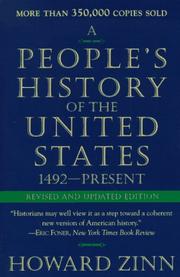
A people's history of the United States
Howard Zinn retells U.S. history from the point of view of workers, women, people of color, and activists, focusing on protests, labor strikes, and grassroots movements rather than political leaders and battles.
Best for readers who want a history told through the experiences of marginalized groups and social movements instead of a presidents-and-battles account.
Why it made the list
- Zinn centers events like the Boston Tea Party, Reconstruction, and the civil rights movement on ordinary people and their struggles, showing how protests and labor actions shaped outcomes.
- The book challenges traditional narratives by highlighting episodes such as Native American resistance, the anti–Vietnam War movement, and early labor organizing to reveal overlooked perspectives.
Unlike standard histories that focus on presidents and policy, Zinn emphasizes grassroots activism, strikes, and popular uprisings as the engine of change.
Check current price and availability on Amazon.
Buy Now on Amazon Read more about A people's history of the United States#5
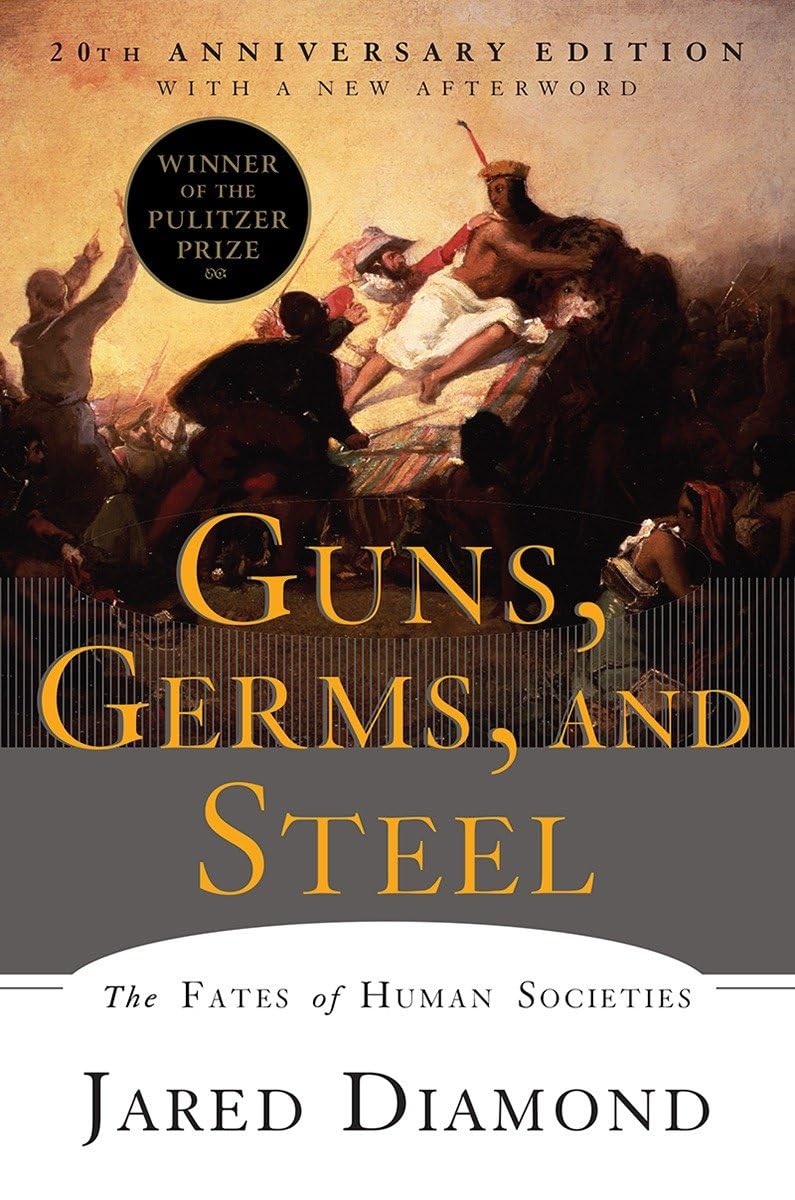
Guns, Germs, and Steel
Jared Diamond explores why some human societies conquered others by tracing how geography, food production, disease, and technology shaped world history over the last 13,000 years.
Best for readers who want a broad, big-picture explanation of world history that links geography, crops, and technology across continents.
Why it made the list
- Diamond uses concrete case studies—like the spread of agriculture in the Fertile Crescent and the Eurasian transfer of horses and steel—to show how environment and resources affected power.
- The book connects germs and immunity to real historical outcomes, explaining how diseases carried by domestic animals helped Europeans conquer peoples in the Americas and elsewhere.
Unlike single-region histories, Diamond argues for environmental and biological causes behind global inequality, using cross-cultural comparisons and archaeological examples.
Check current price and availability on Amazon.
Buy Now on Amazon Read more about Guns, Germs, and Steel#6
The Wright Brothers
David McCullough tells the story of Wilbur and Orville Wright, tracing their work in Dayton bicycle shops and their experiments at Kitty Hawk that led to the first controlled, powered flights.
Best for readers who want a clear, fact-based life story about invention, focused on the technical tests at Kitty Hawk and the Wrights’ workbench in Dayton.
Why it made the list
- McCullough uses letters, family stories, and Dayton business records to show how the brothers’ bicycle repair skills and careful testing of wing shapes led to the 1903 Flyer at Kitty Hawk.
- The book follows real people like Katharine Wright and mentor Octave Chanute, so readers see how family support, patent fights, and public demonstrations shaped the Wrights’ path to success.
Unlike technical manuals, this biography centers on the Wrights’ personal letters, business dealings, and the step-by-step experiments that produced the first sustained powered flights.
Check current price and availability on Amazon.
Buy Now on Amazon Read more about The Wright Brothers#7
A History of the End of the World: How the Most Controversial Book in the Bible Changed the Course of Western Civilization
Jonathan Kirsch follows the Book of Revelation from its disputed authorship in the first century through how its beasts, bowls, and thousand-year reign shaped Christian theology, paintings, political speeches, and popular fears about the end times.
Best for readers who want a cultural history focused on one text will like Kirsch’s account of Revelation’s symbols, art, and political uses across Western history.
Why it made the list
- Kirsch explains how specific Revelation images—like the four horsemen, the number 666, and the Beast—were used by medieval clergy, Renaissance artists, and modern politicians to justify actions or warn of enemies.
- The book traces concrete episodes, such as Protestant reformers calling the pope the Antichrist and 20th-century apocalyptic movements using Revelation passages to frame wars and revolutions.
Unlike technical biblical commentaries, Kirsch writes for general readers and ties Revelation’s imagery directly to artists, preachers, and political leaders who reshaped its meaning.
Check current price and availability on Amazon.
Buy Now on Amazon Read more about A History of the End of the World: How the Most Controversial Book in the Bible Changed the Course of Western Civilization#8
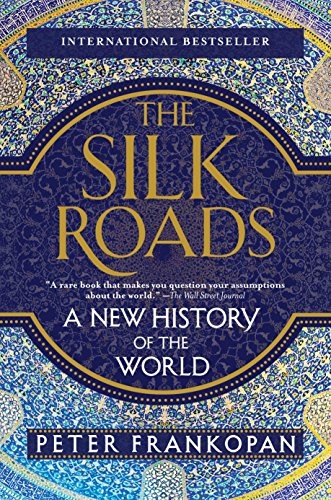
The Silk Roads
Peter Frankopan reframes world history around the trade routes linking East and West, tracing how silk, spices, ideas, and armies moved across Eurasia from ancient times to the modern era.
Best for readers who want a panoramic, narrative account that highlights connections across regions rather than a strict chronology focused on Europe.
Why it made the list
- Frankopan centers the story on the Silk Road itself, using cities like Samarkand and Constantinople to show how movement and trade shaped empires and ideas.
- The book connects big moments—such as the rise of Islam and the Mongol conquests—to long-distance trade and cross-cultural contact, so you see familiar events in a wider context.
Unlike Europe-centered surveys, Frankopan deliberately shifts the focus eastward and ties political change to economic and cultural exchange along trade routes.
Check current price and availability on Amazon.
Buy Now on Amazon Read more about The Silk Roads#9
Reparations
Stephen Kimber follows cases of land dispossession, denied veterans’ pensions, and discriminatory laws through archival documents and interviews to show how those historical injustices connect to today’s debates about reparations and public policy.
Best for readers who want a journalist’s investigation of reparations that combines archival cases, eyewitness testimony, and municipal and federal policy discussions will find Kimber’s approach clear and evidence-focused.
Why it made the list
- Kimber examines legal fights over lost land and veterans’ pension denials as concrete examples of how court decisions and administrative rules sustained harm across generations.
- He uses on-the-ground reporting, archival research, and interviews with survivors, activists, and public officials to tie personal testimony to practical policy questions like eligibility and cost.
Instead of arguing only in moral terms, Kimber reconstructs specific institutional practices—such as pension denial cases and land-loss histories—to show how past policies produced present inequalities.
Check current price and availability on Amazon.
Buy Now on Amazon Read more about Reparations#10
Quick commitmentHome: The Blueprints of Our Lives
John Edwards uses photographs, sketches and short essays to show how rooms, furniture and objects shape memory, habit and identity across different homes.
Best for readers who like quiet, visual books about domestic life will appreciate the meditative essays and images that connect specific rooms and objects to personal stories.
Why it made the list
- The book pairs Edwards's photographs of real interiors with brief essays that point out how a kitchen table, a narrow hallway or a child's bedroom records family routines and life stages.
- Edwards examines design details such as built-in shelving, light from windows and the placement of seating to explain how physical layouts guide daily movement and social habits.
Unlike step-by-step design guides, Edwards mixes photographs and reflective writing to treat a home's worn sofa or attic boxes as clues to identity and memory.
Check current price and availability on Amazon.
Buy Now on Amazon Read more about Home: The Blueprints of Our Lives






Questions about this guide
How do I choose from Best History Books for Beginners?
Start with the first few picks, then use the short notes under each book to match the book to your mood, reading time, and preferred style.
Are these books good to buy as gifts?
Many of these picks work well as gifts because the list favors books with clear appeal, recognizable hooks, and enough information to choose quickly.
How often is this list updated?
UPB refreshes these guide pages as catalog data, availability, and book recommendations change.
Related guides worth comparing
How to use this guide
Who this list is for
- Readers who want a tighter starting shelf for Best History Books for Beginners instead of a bloated browse page.
- A good fit if you want the page to steer you toward clearer entry points instead of the hardest books first.
- This page leans toward books people can use, apply, or recommend with confidence.
Compare the leading picks
- 1776 is the better start if you want best for readers who want a clear, narrative account of the Revolutionary War year centered on Washington rather than a dense political analysis; Sapiens makes more sense if you want a wide-angle, idea-driven history that connects biology, culture, and economics in clear, story-like chapters will enjoy this book.
- If you want the lighter commitment, start with Home: The Blueprints of Our Lives; if you want more depth, move to A people's history of the United States.
- Sex with the Queen: 900 Years of Vile Kings, Virile Lovers, and Passionate Politics (P.S.) stands apart because it is unlike political histories that focus only on battles or laws, this book centers on personal relationships—mistresses, royal marriages, and court gossip—as drivers of historical change.
How we chose
- We keep these guide pages tight at 7 to 15 books so the list stays useful instead of turning into catalog sprawl.
- We favor cleaner editions, stronger reader response, and books with enough substance to justify the click.
- We push down fiction bleed, school editions, placeholder listings, and weak records that do not hold up as recommendations.
- Every page is capped on purpose: if a book does not clearly help the shelf, it stays off the page.