Readable science with real-world relevance
Best Science Books for Curious Readers
This shelf is designed for readers who want serious science explained clearly without dry textbook drag.
If you want books that make complex topics understandable and useful, this is a strong starting point.
Quick guide
Best for
How we narrowed it down
How the top picks differ
Top picks
Quick-read reasons, strong internal links, and a fast price check when you are ready.

#1
Top pickContemporary Health Physics : Problems and Solutions
Contemporary Health Physics: Problems and Solutions walks through real radiation protection problems with step-by-step worked answers, using practical scenarios from medical, industrial, and environmental settings to teach concepts.
Why it made the list
- The book centers on worked problems, so readers see how to calculate doses, shielding thickness, and contamination limits using concrete numbers and standard formulas.
- Bevelacqua draws examples from real-world contexts like diagnostic radiology, nuclear power operations, and environmental monitoring, which shows how theory applies to everyday health physics tasks.
#2
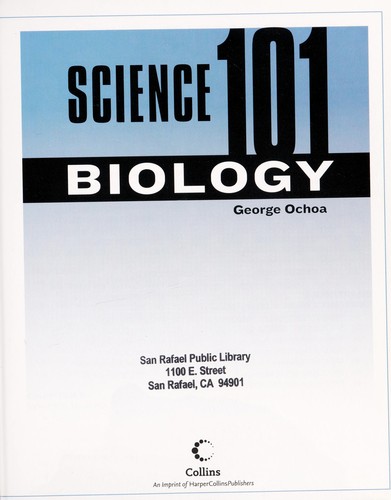
Top pickBiology (Science 101)
Biology (Science 101) walks readers through core life-science ideas like cells, evolution, DNA, and ecosystems using clear classroom-style explanations and everyday analogies that link concepts to real-world examples.
Why it made the list
- The book explains cell structure by comparing organelles to factory parts, using mitochondria and ribosomes as repeated examples to show how energy and protein production work in living cells.
- It lays out evolution with concrete cases such as natural selection in Galápagos finches and the role of mutations in antibiotic resistance, so you see how heredity and environment interact.

#3
Top pickKinds of Minds (Science Masters)
Daniel Dennett explores how minds—human and animal—work by tracing consciousness, intentionality, and the evolution of mental abilities in clear, argument-driven chapters that mix philosophy, cognitive science, and evolutionary theory.
Why it made the list
- Dennett uses thought experiments and real-world examples, like animal cognition studies and debates over , to show how consciousness can be studied without mystical explanations.
- The book compares different 'kinds' of minds—from simple nervous systems to full human self-awareness—so readers see concrete contrasts between animal behavior, brain processes, and human reasoning.

#4
What Is Life?: Investigating the Nature of Life in the Age of Synthetic Biology
Ed Regis traces the scientific and philosophical hunt for a definition of life, moving from early experiments to modern synthetic biology while profiling key thinkers and landmark lab feats.
Why it made the list
- Regis describes classic experiments and figures—like attempts to synthesize life in the lab and debates over whether viruses count as alive—so readers see the concrete experiments that shaped the field.
- The book explains how synthetic biology raises new questions by following real projects and scientists working on creating life-like systems, not just abstract theory.

#5
Forensic Science Explained
Forensic Science Explained walks through how chemical and instrumental techniques are used to analyze crime-scene traces, with clear examples of evidence types like fibers, blood, and latent prints.
Why it made the list
- Almirall describes real analytical methods such as chromatography and mass spectrometry and shows how they reveal the composition of samples taken from a scene.
- The book uses case-based examples and laboratory-style explanations to connect chemical principles to common forensic questions about identification and comparison of materials.

#6
Evolution & History of Life
In Eight Little Piggies, Stephen Jay Gould collects essays that trace how evolutionary ideas shaped life and human understanding, mixing natural-history stories—from the fossil record and embryology to beetle collecting—with witty, conversational science writing.
Why it made the list
- Gould uses the famous Burgess Shale fossils and the odd body plans preserved there to argue about contingency in evolution, showing how small historical accidents can lead to very different kinds of animals.
- Several essays explore developmental biology and homology, including clear examples of how limb and tooth structures change across mammals to reveal deep patterns in vertebrate evolution.

#7
Contemporary Society: An Introduction to Social Science
Contemporary Society explains how social scientists study everyday institutions like family, education, and work, using clear examples and data-driven chapters that connect theory to real-world issues.
Why it made the list
- The book uses common institutions—family, schools, and the labor market—as concrete case studies to show how social patterns form and change.
- Authors John and Erna Perry mix social theory with real data and survey findings so you can see how researchers test ideas about inequality and social mobility.

#8
Biochemistry and Molecular Biology of Antimicrobial Drug Action
This book explains how antibiotics and other antimicrobial drugs work at the molecular level, describing targets like bacterial cell walls, protein synthesis machinery, and nucleic acid enzymes in clear, chapter-focused explanations.
Why it made the list
- Franklin walks through specific drug classes—beta-lactams, aminoglycosides, tetracyclines—and shows how each one interrupts bacterial processes such as peptidoglycan cross-linking or ribosomal function.
- The text links molecular action to resistance mechanisms by detailing examples like beta-lactamase enzymes and alterations in ribosomal binding sites that let microbes evade drugs.
#9
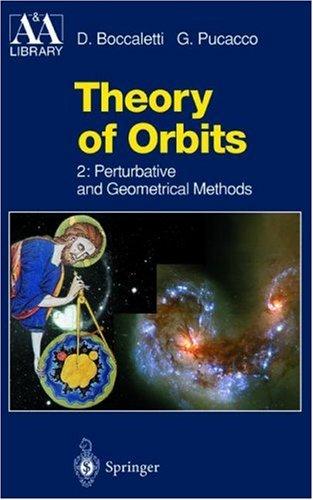
Theory of Orbits : Volume 1: Integrable Systems and Non-perturbative Methods (Astronomy and Astrophysics Library)
This book examines the mathematical theory behind orbital motion, focusing on integrable systems and non-perturbative methods used to study orbits in celestial mechanics.
Why it made the list
- The authors work through integrable models for two- and three-body problems, showing exact solutions and conserved quantities that illuminate why some orbital motions are predictable.
- You get detailed non-perturbative techniques, such as canonical transformations and action–angle variables, that the text uses to analyze stability without relying on small-parameter approximations.

#10
One Long Argument: Charles Darwin and the Genesis of Modern Evolutionary Thought (Questions of Science)
Ernst Mayr traces how Charles Darwin developed the idea of natural selection and how that idea changed biology, focusing on the historical debates, key experiments, and Darwin’s major writings rather than just retelling his life.
Why it made the list
- Mayr explains how Darwin’s observations on the HMS Beagle and his reading of Malthus led directly to the natural selection idea, showing the specific moments that shaped the theory.
- The book lays out the scientific debates Darwin faced, including challenges from contemporaries over species change and heredity, so you see how the idea of evolution emerged within real 19th-century arguments.
More reader guides worth opening next
Use these follow-up guide links when you want a tighter shelf around the same reading mood.