Practical family-life picks
Parenting Books That Every Parent Should Read
This guide is for parents and caregivers who want books that feel practical, kind, and usable in real family life.
The list leans toward child development, communication, routines, discipline, and books that help adults understand what children are working through.
Quick guide
Best for
How we narrowed it down
How the top picks differ
Top 10 Books
Quick-read reasons, strong internal links, and a fast price check when you are ready.

#1
Top pickGod Went To Beauty School
A gentle picture book by Cynthia Rylant that imagines God learning to care for children by practicing small acts of kindness in everyday places like kitchens, parks, and bedrooms.
Why it made the list
- Rylant’s quiet, everyday scenes show caregiving in ordinary settings—putting bandages on knees, tucking in blankets—that make the idea of divine care feel simple and practical.
- The book pairs spare, comforting language with soft illustrations to focus on themes of nurturing and safety rather than doctrine, so readers feel its warmth more than a lesson.

#2
Top pickBattle Of The Dum Diddys (Rotten School, Bk. 12)
Rotten School descends into full-on chaos when a wild contest turns prank wars into personal battles, forcing students to scheme, squabble, and scramble to come out on top in R. L. Stine’s fast, joke-filled story.
Why it made the list
- The book centers on a single outrageous contest that sparks escalating pranks across Rotten School, so readers get nonstop slapstick and trickery tied to a clear school-based premise.
- Stine uses short chapters and punchy scenes focused on the rivalry between students, which keeps the tone breezy and the jokes coming without deep melodrama.

#3
Top pickPunk'd And Skunked (Rotten School, Bk. 11)
In this eleventh Rotten School book, prank-loving Beansy and his classmates get into wild schemes at a chaotic prep school, mixing slapstick humor with school-based rivalry and exaggerated characters that R. L. Stine writes in a fast, comic style.
Why it made the list
- Stine centers the plot on over-the-top pranks and school rivalries that play out in familiar settings like classrooms, cafeterias, and the school gym, so readers who like silly, plot-driven school antics will find lots to laugh at.
- The book uses short chapters and punchy jokes focused on Beansy and his nemeses, highlighting Stine’s knack for quick-paced scenes and exaggerated characters rather than quiet, realistic moments.

#4
Casey Back At Bat
Dan Gutman's picture-book sequel follows young Casey as he returns to the baseball diamond for one last dramatic at-bat, using simple text and bold illustrations to capture the silly chaos and pressure kids feel in front of a crowd.
Why it made the list
- It puts a child's-eye view on sports pressure by letting readers live Casey's jitters and hope during a single, comedy-filled at-bat.
- Gutman's playful tone and exaggerated illustrations turn routine baseball moments—like the pitch, the swing, and the crowd's reaction—into laugh-out-loud set pieces for young readers.

#5
Replay
Replay follows a girl named Aidan who spends a summer reconnecting with her grandparents and discovering family stories, written in Sharon Creech's clear, lyrical voice that blends everyday details with quiet emotion.
Why it made the list
- Creech uses a close, present-tense perspective to show Aidan's small discoveries—like learning a grandparent's surprising secret and exploring the old house—which makes the family theme feel immediate and real.
- The book mixes ordinary summer scenes with deeper questions about memory and loss, so readers who like character-driven stories that examine how family history shapes identity will find a lot to notice.

#6
The Lorax (Classic Seuss)
Dr. Seuss’s The Lorax is a short, rhyming fable about the Lorax, who 'speaks for the trees,' and the Once-ler, whose business cuts down Truffula trees until the landscape is ruined; it uses playful language and bright illustrations to tell a clear story about consequences and stewardship.
Why it made the list
- The book makes the cost of unchecked industry concrete by showing how the Once-ler’s factories remove Truffula trees and leave behind smog, brown Bar-ba-loots, and a silent, empty valley.
- Through the Lorax’s repeated plea and the Once-ler’s later regret, the story teaches that speaking up and taking responsibility matter for future generations, a theme delivered in catchy rhymes that children remember.

#7
Positive Discipline for Preschoolers: For Their Early Years--Raising Children Who Are Responsible, Respectful, and Resourceful
Positive Discipline for Preschoolers gives clear, age-focused strategies for guiding young children toward responsibility and respect, using classroom-tested techniques from Jane Nelsen and coauthors applied to home situations for ages roughly 2–6.
Why it made the list
- The book centers on short, concrete scripts and problem-solving steps parents can use when a preschooler is defiant or upset, rather than abstract parenting theory.
- It adapts Adlerian ideas into everyday tools like family meetings, choices, and logical consequences that fit preschool routines and common issues such as tantrums and sibling fights.

#8
January Monthly Activities - Early Childhood: Early Childhood
A month of January activities for preschoolers that pairs simple crafts, movement games, and story prompts with clear early-learning goals tied to motor, language, and social development.
Why it made the list
- The book lays out themed, ready-to-use January crafts and movement activities that teachers and caregivers can start the same day, using common, low-cost materials.
- Each activity includes a short learning focus—like boosting fine motor skills with cutting and pasting snowflakes or building vocabulary through winter story prompts—so the purpose is clear for planning.

#9
Safe Kids Safe Families
Samantha Wilson gives clear, practical advice for preventing common risks and making homes, schools, and online spaces safer for children, with examples drawn from everyday family situations.
Why it made the list
- Wilson lays out concrete prevention steps parents can use at home, such as setting routines for check-ins and securing common household hazards, so readers get actionable habits rather than abstract theory.
- The book describes how to spot warning signs of trouble in different settings—like changes in a child’s behavior at school or risky online interactions—and offers straightforward responses parents can apply immediately.
#10
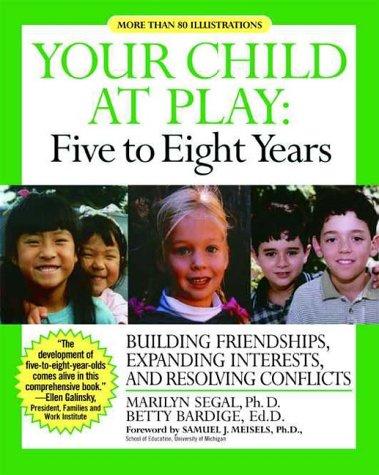
Your Child at Play: Five to Eight Years: Problem-Solving, Relationships, and Going to School
This book shows how play helps five- to eight-year-olds solve problems, form friendships, and get ready for school through clear activities, real examples, and everyday language.
Why it made the list
- The authors center on concrete play activities — like role-play, building games, and storytelling — that teach problem-solving skills children can use in classroom and home conflicts.
- Chapters include vivid, real-life examples of common social issues for 5–8 year olds, such as sharing, turn-taking, and managing teasing, with step-by-step ways parents can guide children during play.
More reader guides worth opening next
Use these follow-up guide links when you want a tighter shelf around the same reading mood.