
Best Self-Improvement Books That Actually Work
This shelf favors self-improvement books with practical language, clear benefits, and advice you can apply right away.
Top recommendations
Top pick
How to Win Friends & Influence People
Unlike academic books, Carnegie focuses on anecdote-driven rules and everyday examples from mid-20th-century business and social life to teach interpersonal habits.
Check current price and availability on Amazon.
Check Availability on Amazon#2 pick
J.R.R. Tolkien: A Biography
Unlike interpretive studies, Carpenter sticks to documented sources and chronological narrative to show how events like Tolkien’s WWI service and Oxford teaching affected his writing.
Check current price and availability on Amazon.
Check Availability on Amazon#3 pick
ATOMIC HABITS
What sets this book apart is its emphasis on systems and tiny habits—Clear shows how adjusting the cues and context around behavior often matters more than sheer willpower.
Check current price and availability on Amazon.
Check Availability on Amazon#1
Top pickHow to Win Friends & Influence People
Dale Carnegie’s How to Win Friends & Influence People gives short, story-driven rules for handling people, making others like you, and leading without force in everyday conversations and work situations.
Best for readers who want clear, practiceable techniques for improving conversations with coworkers, clients, and acquaintances will find Carnegie’s short rules and stories useful.
Why it made the list
- Carnegie uses real-world anecdotes about salesmen, managers, and public speakers to show specific habits like remembering names and avoiding direct criticism.
- The book lays out concrete do's-and-don'ts such as encouraging others to talk about themselves and admitting your own mistakes to build trust quickly.
Unlike academic books, Carnegie focuses on anecdote-driven rules and everyday examples from mid-20th-century business and social life to teach interpersonal habits.
Check current price and availability on Amazon.
Check Availability on Amazon Read more about How to Win Friends & Influence People#2
Top pickJ.R.R. Tolkien: A Biography
Humphrey Carpenter traces J.R.R. Tolkien’s life from his childhood in Birmingham and South Africa through his Oxford career, military service in World War I, friendships in the Inklings, and the writing of The Hobbit and The Lord of the Rings.
Best for readers who want fact-rich details about Tolkien’s academic life, his faith, and the historical context behind the publication of The Hobbit and LOTR.
Why it made the list
- Carpenter uses letters, university records, and interviews to show how Tolkien’s work as a philologist and his study of Old English shaped place names and languages in Middle-earth.
- The biography gives concrete scenes of Tolkien’s time at Exeter College and Merton College and his walks with C.S. Lewis, which explain the daily routines and friendships that influenced his storytelling.
Unlike interpretive studies, Carpenter sticks to documented sources and chronological narrative to show how events like Tolkien’s WWI service and Oxford teaching affected his writing.
Check current price and availability on Amazon.
Check Availability on Amazon Read more about J.R.R. Tolkien: A Biography#3
Top pickATOMIC HABITS
James Clear explains how tiny, repeatable changes add up into big results, using clear examples like habit stacking, environment design, and the four laws of behavior change to show how routines become automatic.
Best for readers who want step-by-step methods to build small daily routines that compound into long-term improvements.
Why it made the list
- Clear lays out the four laws of behavior change—make it obvious, attractive, easy, and satisfying—and illustrates each law with concrete tactics like habit stacking and temptation bundling.
- The book focuses on real-world practice over theory, using dose-by-dose examples such as reshaping your environment to remove for good habits and add to bad ones.
What sets this book apart is its emphasis on systems and tiny habits—Clear shows how adjusting the cues and context around behavior often matters more than sheer willpower.
Check current price and availability on Amazon.
Check Availability on Amazon Read more about ATOMIC HABITS#4
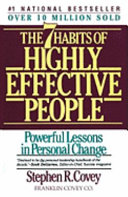
The 7 Habits of Highly Effective People - Restoring the Character Ethic
Stephen R. Covey lays out seven core habits that move readers from dependence to independence and then to interdependence, using stories, practical exercises, and a clear structure rooted in personal character and principles.
Best for readers who want a principled, step-by-step approach to reshape daily habits and improve how they relate to others at work and home.
Why it made the list
- Covey focuses on inner character work, like the proactive habit and clarifying personal values, rather than quick tips, so readers learn durable practices for decision-making and priorities.
- The book uses concrete tools such as the time-management matrix and the weekly planning model to show how to organize tasks around values and long-term goals.
Unlike pop self-help that promises quick fixes, Covey ties personal effectiveness to character and clear practices like the habits of seeking first to understand and synergizing with others.
Check current price and availability on Amazon.
Check Availability on Amazon Read more about The 7 Habits of Highly Effective People - Restoring the Character Ethic#5
Getting to Yes
Getting to Yes teaches principled negotiation through clear habits like separating people from the problem, focusing on interests not positions, and inventing options for mutual gain, illustrated with business and diplomatic examples.
Best for Great for managers, lawyers, and anyone preparing for a specific negotiation like a salary meeting or vendor contract who wants clear tools such as interest-mapping and option brainstorming.
Why it made the list
- Fisher and Ury introduce the core move of separating people from the problem, using role-play examples and anecdotes from real negotiations to show how emotions and relationships can cloud agreement.
- The book lays out the BATNA idea—best alternative to a negotiated agreement—and explains how knowing your BATNA changes what offers you accept, with practical scenarios about job offers and contract talks.
Unlike play-by-play bargaining manuals, Getting to Yes presents a repeating set of principles—separate people, focus on interests, generate options, use objective criteria—that you can apply across business, family, a...
Check current price and availability on Amazon.
Check Availability on Amazon Read more about Getting to Yes#6
Only the Strong Survive: The Odyssey of Allen Iverson
Larry Platt follows Allen Iverson from Norfolk neighborhood fights and high school stardom through his rise in the NBA, mixing game moments, courtroom and media controversies, and Iverson’s trademark playing style into a compact biography.
Best for readers who want a tight, narrative portrait of Iverson’s life and career that ties together specific games, personal background in Norfolk, and media battles will find this appealing.
Why it made the list
- Platt spends time on Iverson’s rookie seasons and MVP year, describing how his crossover and scoring exploits changed games and made him a headline figure.
- The book covers off-court episodes like the Virginia legal case and constant media scrutiny, showing how those controversies shaped Iverson’s public image during the early 2000s.
Unlike bulky anthologies, Platt’s single-author approach keeps the focus on Iverson’s playing style, personal struggles, and media moments rather than wide league-wide context.
Check current price and availability on Amazon.
Check Availability on Amazon Read more about Only the Strong Survive: The Odyssey of Allen Iverson#7
Blindsided: Lifting a Life Above Illness: A Reluctant Memoir
Richard M. Cohen uses his reporter’s eye to tell how serious illness reshaped his work, marriage, and day-to-day life, mixing scenes from hospitals, family conversations, and the struggle to keep reporting.
Best for readers who want a candid, real-world account of caregiving and career disruption grounded in one journalist’s family and hospital experiences.
Why it made the list
- Cohen writes about specific moments in treatment and caregiving, including the impact on his marriage to journalist Alexandra Wood and the choices he makes about returning to work.
- The book’s steady, plain style reflects Cohen’s newsroom background as he examines how medical setbacks forced him to rebuild routines, trust, and professional identity.
Unlike memoirs that dramatize illness, Cohen emphasizes journalistic observation and the gradual work of reclaiming a life after serious medical events.
Check current price and availability on Amazon.
Check Availability on Amazon Read more about Blindsided: Lifting a Life Above Illness: A Reluctant Memoir#8
Mars and Venus in the Workplace: A Practical Guide for Improving Communication and Getting Results at Work
John Gray applies his Mars and Venus relationship ideas to office life, offering scripts and step-by-step tactics to handle meetings, performance talks, and project handoffs between colleagues who communicate differently.
Best for managers and team leads who want ready-made phrases and clear role-based tips for one-on-one coaching, performance conversations, and smoothing cross-department handoffs.
Why it made the list
- Gray gives concrete scripts for manager-employee talks and sample responses for common workplace conflicts, like a missed deadline or a misunderstood request.
- The book uses the Mars and Venus gender lens to explain why two co-workers might react differently under stress and shows how to reframe requests so projects keep moving.
Unlike academic workplace books, Gray’s approach centers on short scripts, anecdotes, and a consistent Mars versus Venus distinction to solve everyday office communication problems.
Check current price and availability on Amazon.
Check Availability on Amazon Read more about Mars and Venus in the Workplace: A Practical Guide for Improving Communication and Getting Results at Work#9
More Than Money: True Stories of People Who Learned Life's Ultimate Lesson
Neil Cavuto collects true, personal stories about people who changed their lives after success, loss, or crisis, and he draws practical lessons about meaning, family, and values from those moments.
Best for readers who follow Neil Cavuto or like short, human stories about family, work, and personal turning points will find the book’s reflections easy to connect with.
Why it made the list
- Cavuto uses real vignettes of people who walked away from wealth or rebuilt families after illness to show how priorities shift when money stops being the main goal.
- Several essays focus on how grief, job loss, or health scares forced people to ask what really matters, giving concrete examples readers can relate to in their own crises.
Unlike how-to finance books, Cavuto’s collection centers on individual life moments—family reconciliation, coping with illness, and career reassessment—rather than market advice.
Check current price and availability on Amazon.
Check Availability on Amazon Read more about More Than Money: True Stories of People Who Learned Life's Ultimate Lesson#10
Upside Down
In Upside Down, Diana Ross reflects on her rise to fame, major career moments, and three decades in music and entertainment. Her memoir offers a personal view of Motown history and life as a performer.
Best for Fans of Diana Ross, readers studying Motown, and anyone who enjoys celebrity memoirs centered on music and performance.
Why it made the list
- Read it for Diana Ross's firsthand account of her career, from her early rise to her lasting place in music and entertainment.
- Ross's personal reflections make this useful for readers interested in Motown history, performance, and the cultural impact of her era.
Unlike a traditional self-improvement book, Upside Down is a reflective memoir about Diana Ross's life, career milestones, and place in music history.
Check current price and availability on Amazon.
Check Availability on Amazon Read more about Upside Down




Questions about this guide
How do I choose from Best Self-Improvement Books That Actually Work?
Start with the first few picks, then use the short notes under each book to match the book to your mood, reading time, and preferred style.
Are these books good to buy as gifts?
Many of these picks work well as gifts because the list favors books with clear appeal, recognizable hooks, and enough information to choose quickly.
How often is this list updated?
UPB refreshes these guide pages as catalog data, availability, and book recommendations change.
Related guides worth comparing
How to use this guide
Who this list is for
- Readers who want a tighter starting shelf for Best Self-Improvement Books That Actually Work instead of a bloated browse page.
- A good fit if you want the page to steer you toward clearer entry points instead of the hardest books first.
- Useful if you care about finding a lower-risk first book before taking on something bigger.
Compare the leading picks
- How to Win Friends & Influence People is the better start if you want clear, practiceable techniques for improving conversations with coworkers, clients, and acquaintances will find Carnegie’s short rules and stories useful; J.R.R. Tolkien: A Biography makes more sense if you want best for readers who want fact-rich details about Tolkien’s academic life, his faith, and the historical context behind the publication of The Hobbit and LOTR.
- If you want the lighter commitment, start with Getting to Yes; if you want more depth, move to The 7 Habits of Highly Effective People - Restoring the Character Ethic.
- ATOMIC HABITS stands apart because it is what sets this book apart is its emphasis on systems and tiny habits—Clear shows how adjusting the cues and context around behavior often matters more than sheer willpower.
How we chose
- We keep these guide pages tight at 7 to 15 books so the list stays useful instead of turning into catalog sprawl.
- We favor cleaner editions, stronger reader response, and books with enough substance to justify the click.
- We push down fiction bleed, school editions, placeholder listings, and weak records that do not hold up as recommendations.
- Every page is capped on purpose: if a book does not clearly help the shelf, it stays off the page.