
Best Nonfiction Books That Change How You Think
This list narrows nonfiction to books with clear thesis, practical upside, and discussion value.
Top recommendations
Top pick
Thinking, Fast and Slow
Unlike quick pop-psychology titles, Kahneman combines decades of peer-reviewed research and carefully described experiments to show when intuition helps and when it fails.
Check current price and availability on Amazon.
Check Availability on Amazon#2 pick
Fighting for Peace
Unlike a textbook, Albom centers on conversations and personal scenes—vignettes with veterans, survivors, and moral questions—rather than systematic theory or statistics.
Check current price and availability on Amazon.
Check Availability on Amazon#3 pick
Outliers
Unlike pure biographies, Outliers weaves many small, specific stories across different fields to argue that context and timing shape achievement as much as individual traits.
Check current price and availability on Amazon.
Check Availability on Amazon#1
Top pickThinking, Fast and Slow
Kahneman lays out how two systems of thought—fast, automatic intuition and slow, deliberate reasoning—shape judgments, choices, and mistakes across everyday life and public policy.
Best for readers who want a deep, evidence-based explanation of why people reliably make the same cognitive errors and how those errors affect major decisions.
Why it made the list
- The book explains classic experiments, like the anchoring effect and the availability , showing how simple mental shortcuts lead to systematic errors.
- Kahneman links laboratory findings to real-world decisions in economics and medicine, using clear examples of how intuitive judgments can mislead experts and policymakers.
Unlike quick pop-psychology titles, Kahneman combines decades of peer-reviewed research and carefully described experiments to show when intuition helps and when it fails.
Check current price and availability on Amazon.
Check Availability on Amazon Read more about Thinking, Fast and Slow#2
Top pickFighting for Peace
Mitch Albom mixes short memoir scenes, interviews, and moral reflections to ask how people seek peace amid war, crime, and personal loss, using real conversations and his own experiences as the through-line.
Best for Good for readers who follow Albom's essays and want meditative, first-person reflections on veterans, forgiveness, and moral responsibility.
Why it made the list
- Albom uses a vignette about a veteran and a conversation with a former combatant to show how trauma and memory shape attempts at reconciliation.
- The book pairs Albom's personal memoir moments with interviews of activists and survivors, so readers see both individual choices and wider efforts to build peace.
Unlike a textbook, Albom centers on conversations and personal scenes—vignettes with veterans, survivors, and moral questions—rather than systematic theory or statistics.
Check current price and availability on Amazon.
Check Availability on Amazon Read more about Fighting for Peace#3
Top pickOutliers
Malcolm Gladwell examines why some people achieve extraordinary success by looking at their background, timing, and culture instead of just talent or hard work.
Best for readers who like stories that link surprising historical details to big ideas about success and who enjoy short, warmly told case studies.
Why it made the list
- Gladwell uses concrete case studies, like the Beatles' years playing clubs in Hamburg and Bill Gates' atypical early access to computers, to show how practice and opportunity combine.
- The book introduces the '10,000-hour rule' and explores how cultural legacies and birth dates—such as Canadian hockey players born in the first months of the year—affect outcomes.
Unlike pure biographies, Outliers weaves many small, specific stories across different fields to argue that context and timing shape achievement as much as individual traits.
Check current price and availability on Amazon.
Check Availability on Amazon Read more about Outliers#4
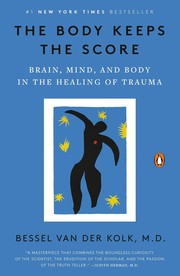
THE BODY KEEPS THE SCORE
Bessel van der Kolk draws on decades of clinical work with trauma survivors to show how traumatic memories live in the body, combining case stories, brain science, and descriptions of therapies like EMDR, neurofeedback, yoga, and theater-based approaches.
Best for readers who want a clinician’s mix of neuroscience and real patient stories that explain why movement, breath, and sensorimotor therapies can matter as much as talk therapy.
Why it made the list
- Van der Kolk uses vivid case histories—such as veterans reliving combat or abuse survivors frozen by the past—to show how trauma hijacks the nervous system and alters memory and attention.
- The book explains research on brain areas like the amygdala and prefrontal cortex and then links that science to concrete treatments, describing how EMDR or gentle body work can release stuck responses.
What sets this book apart is its steady focus on the body: van der Kolk argues and demonstrates through cases and research that healing often requires more than memory-based talk therapy alone.
Check current price and availability on Amazon.
Check Availability on Amazon Read more about THE BODY KEEPS THE SCORE#5
A Canticle for Leibowitz
After a nuclear war, the Albertian Order of Leibowitz keeps scraps of prewar science—blueprints, circuit diagrams, even grocery lists—as holy relics while the world crawls from a new Dark Age toward another rise and fall. Across three eras in the same desert monastery, the story watches faith, memory, and invention circle back on the same hard choices.
Best for readers who want literary science fiction that pairs monastic ritual and Latin chants with moral puzzles about knowledge, sin, and progress after the Flame Deluge.
Why it made the list
- The novel’s three linked parts return to the same abbey in the Southwest desert, so you see Brother Francis’s relic hunt, a later scholar’s revival of electricity, and a final age of starflight echo each other, turning recurrence into lived
- Miller grounds big questions in tactile scenes: monks illuminate a circuit diagram like a medieval manuscript, debate the sanctity of Leibowitz’s “Memorabilia,” and argue with visiting scientists about whether reborn technology serves mercy
Instead of raiders and wasteland chases, the book centers on abbots, novices, and scholars preserving and relearning the “Memorabilia,” showing how institutions carry fragile knowledge across centuries.
Check current price and availability on Amazon.
Check Availability on Amazon Read more about A Canticle for Leibowitz#6
House Thinking: A Room-by-Room Look at How We Live (P.S.) [Paperback] by
Winifred Gallagher walks through kitchens, bedrooms, living rooms and gardens to show how furniture, light, color, and layout shape moods, habits, and thought in everyday homes.
Best for readers who want clear, practical connections between household details—lighting, furniture arrangement, and storage—and how those details affect daily behavior and wellbeing.
Why it made the list
- Gallagher uses room-by-room scenes—like how kitchen counters and appliance placement steer cooking habits—to link concrete domestic features to changes in routine and mood.
- She mixes neuroscience and social research with vivid anecdotes about bedrooms, living rooms, and work corners to explain why sunlight, , or a window seat affect memory and focus.
Unlike pure design books, Gallagher emphasizes psychological effects of domestic choices, showing how a kitchen island or a bedroom lamp can change habits and mental life.
Check current price and availability on Amazon.
Check Availability on Amazon Read more about House Thinking: A Room-by-Room Look at How We Live (P.S.) [Paperback] by#7
A Plague upon Humanity: The Hidden History of Japan's Biological Warfare Program
Daniel Barenblatt reconstructs Japan’s Unit 731 and related programs using military records, survivor testimony, and archival documents to show how scientists and the army turned biological research into weapons and erased victims from official history.
Best for readers who want a detailed investigative history about wartime science, accountability, and how governments and researchers justified biological weapons in imperial Japan.
Why it made the list
- Barenblatt uses translated Japanese military orders and laboratory records to show how Unit 731 operated in Manchuria and conducted lethal human experiments under the guise of medical research.
- The book foregrounds survivor testimony and burial site investigations to connect cold archival facts with the real human cost suffered by Chinese and other victims of airborne and plague experiments.
Unlike general World War II overviews, Barenblatt focuses narrowly on the structure and procedures of Japan’s biological warfare program, including Unit 731’s labs, chains of command, and cover stories.
Check current price and availability on Amazon.
Check Availability on Amazon Read more about A Plague upon Humanity: The Hidden History of Japan's Biological Warfare Program#8
Fast Food Nation: The Dark Side of the All-American Meal
Eric Schlosser investigates how the fast-food industry grew into a powerful force in America, following meatpacking plants, franchise systems, and marketing campaigns to show effects on public health, labor, and rural communities.
Best for readers curious about the connection between Ronald McDonald–style marketing, commodity meat suppliers, and how those forces changed American eating habits will find this deeply reported account useful.
Why it made the list
- Schlosser follows the slaughterhouses and meatpacking supply chain to explain how industrial processing practices affect food safety and outbreaks.
- The book profiles workers and franchise owners to reveal how low wages, automation, and corporate contracts shape labor conditions in fast-food restaurants.
Unlike academic studies, Schlosser blends narrative reporting, interviews, and case studies—such as visits to processing plants and franchise operations—to make structural problems concrete and readable.
Check current price and availability on Amazon.
Check Availability on Amazon Read more about Fast Food Nation: The Dark Side of the All-American Meal#9
A Contagious Evil - the Mind of a Serial Killer
Larry Townsend examines how patterns of predatory behavior develop in serial killers by combining case summaries, behavioral observation, and cultural context to track how impulses turn into repeated crimes.
Best for readers drawn to forensic description and psychological profiles who want clear examples of how predatory patterns form and repeat.
Why it made the list
- Townsend uses specific case excerpts to show how early impulses and victim selection repeat across offenders, making the pattern of escalation easy to follow.
- The book mixes behavioral observation with cultural context, so readers see how social factors and personal history appear in the formation of a serial killer’s methods.
Unlike academic criminology texts, Townsend focuses on case summaries and observable behavior rather than statistical models or exhaustive citation.
Check current price and availability on Amazon.
Check Availability on Amazon Read more about A Contagious Evil - the Mind of a Serial Killer#10
Birth of the Chess Queen: A History
Marilyn Yalom traces how the chess queen grew from a weak piece into the most powerful figure on the board, weaving together medieval history, gender roles, and the changing image of queens in European culture.
Best for readers interested in the history of ideas, gender in medieval Europe, and how cultural images of rulers influenced everyday pastimes like chess.
Why it made the list
- Yalom links the rise of the queen piece to concrete historical shifts like the 15th-century rule changes in chess and the political visibility of queens such as Isabella of Castile.
- The book combines close readings of medieval texts and art with examples like Queen Elizabeth I and courtly literature to show how ideas about female authority shaped the game’s rules.
Unlike a straight chess history, Yalom centers on cultural symbols—medieval poetry, royal portraits, and legal changes—to explain why the queen’s power changed over time.
Check current price and availability on Amazon.
Check Availability on Amazon Read more about Birth of the Chess Queen: A History



![Cover image for House Thinking: A Room-by-Room Look at How We Live (P.S.) [Paperback] by](https://covers.openlibrary.org/b/isbn/9780060538804-M.jpg?default=false)


Questions about this guide
How do I choose from Best Nonfiction Books That Change How You Think?
Start with the first few picks, then use the short notes under each book to match the book to your mood, reading time, and preferred style.
Are these books good to buy as gifts?
Many of these picks work well as gifts because the list favors books with clear appeal, recognizable hooks, and enough information to choose quickly.
What makes a nonfiction book worth buying?
A worthwhile nonfiction book gives you a clear idea, useful examples, and something you can remember or apply after you close it.
Related guides worth comparing
How to use this guide
Who this list is for
- Readers who want a tighter starting shelf for Best Nonfiction Books That Change How You Think instead of a bloated browse page.
- This page leans toward books people can use, apply, or recommend with confidence.
Compare the leading picks
- Thinking, Fast and Slow is the better start if you want best for readers who want a deep, evidence-based explanation of why people reliably make the same cognitive errors and how those errors affect major decisions; Fighting for Peace makes more sense if you want good for readers who follow Albom's essays and want meditative, first-person reflections on veterans, forgiveness, and moral responsibility.
- If you want the lighter commitment, start with Fighting for Peace; if you want more depth, move to Thinking, Fast and Slow.
- Outliers stands apart because it is unlike pure biographies, Outliers weaves many small, specific stories across different fields to argue that context and timing shape achievement as much as individual traits.
How we chose
- We keep these guide pages tight at 7 to 15 books so the list stays useful instead of turning into catalog sprawl.
- We favor cleaner editions, stronger reader response, and books with enough substance to justify the click.
- We push down fiction bleed, school editions, placeholder listings, and weak records that do not hold up as recommendations.
- Every page is capped on purpose: if a book does not clearly help the shelf, it stays off the page.