
Best Psychology Books for Better Thinking
This page is for readers who want psychology books that improve the way they think, decide, and understand behavior. The aim is...
Top pick
Origins of the Modern Mind: Three Stages in the Evolution of Culture and Cognition
Unlike brain-only accounts, Donald ties cognition to cultural scaffolding, showing how oral epics and written archives rewire how communities think.
Check current price and availability on Amazon.
Buy Now on Amazon#2 pick
The Power of Habit
Unlike textbooks, Duhigg mixes storytelling and reporting to connect scientific studies to real-world examples like Tony Dungy’s coaching and the Target marketing case.
Check current price and availability on Amazon.
Buy Now on Amazon#3 pick
The Burn Rate Diet: The New Mind-Body Treatment for Permanent Weight Control
Unlike purely diet-focused books, this title emphasizes managing stress and small daily movements alongside meal choices as part of a single "burn rate" approach.
Check current price and availability on Amazon.
Buy Now on Amazon#1
Top pickOrigins of the Modern Mind: Three Stages in the Evolution of Culture and Cognition
Merlin Donald maps how human thinking changed across three major stages: mimetic culture in early Homo erectus, mythic culture shaped by spoken language, and theoretic culture built on external symbols like writing. He blends anthropology, cognitive psychology, and archaeology to explain how tools, rituals, stories, and scripts reshaped memory and reasoning.
Best for readers curious how language, myth, and writing systems changed the brain’s problem-solving and memory over human history.
Why it made the list
- The mimetic stage shows early humans using gesture, dance, and ritual to share knowledge before words, a concrete link between body movement and cognition.
- Donald’s idea of external symbolic storage—things like clay tablets, alphabets, and diagrams—explains how writing systems and media extend working memory and allow complex, abstract thought.
Unlike brain-only accounts, Donald ties cognition to cultural scaffolding, showing how oral epics and written archives rewire how communities think.
Check current price and availability on Amazon.
Buy Now on Amazon Read more about Origins of the Modern Mind: Three Stages in the Evolution of Culture and Cognition#2
Top pickThe Power of Habit
Charles Duhigg traces how habits form in individuals, companies, and communities, using case studies like the Starbucks employee-training system and the civil-rights-era Montgomery bus boycott to show a consistent cue-routine-reward pattern behind behavior.
Best for readers who want practical tools for changing daily behavior will find useful techniques like habit mapping and experimenting with different rewards.
Why it made the list
- Duhigg explains the cue-routine-reward loop and uses the story of how Michael Phelps and his coach built swimming habits to show how small changes in routine can produce big results.
- The book breaks down organizational habits with concrete examples such as how Alcoa’s safety program changed company culture and raised productivity by focusing on a single keystone habit.
Unlike textbooks, Duhigg mixes storytelling and reporting to connect scientific studies to real-world examples like Tony Dungy’s coaching and the Target marketing case.
Check current price and availability on Amazon.
Buy Now on Amazon Read more about The Power of Habit#3
Top pickThe Burn Rate Diet: The New Mind-Body Treatment for Permanent Weight Control
Stephen R. Van Schoyck presents a mind-body program that links eating, daily activity, and stress to a steady metabolic "burn rate" and argues that changing habits can produce lasting weight control.
Best for readers who want a health plan that combines eating habits with daily activity and stress management will find the book's burn-rate idea and routine suggestions useful.
Why it made the list
- The book centers on the idea of a personal "burn rate" that connects calorie intake to everyday movement and stress, so readers learn a single concrete concept to track and change.
- Van Schoyck lays out specific routines tying meals, walking or household activity, and relaxation techniques to metabolic control, giving practical steps rather than only theory.
Unlike purely diet-focused books, this title emphasizes managing stress and small daily movements alongside meal choices as part of a single "burn rate" approach.
Check current price and availability on Amazon.
Buy Now on Amazon Read more about The Burn Rate Diet: The New Mind-Body Treatment for Permanent Weight Control#4
Essentialism
Greg McKeown argues that making deliberate trade-offs and focusing on a few vital activities produces more impact than doing many things badly, and he offers habits for identifying essentials, saying no, and protecting priorities in work and life.
Best for people who feel pulled in too many directions at work or home and want step-by-step language and habits to decide what to stop doing and what to keep.
Why it made the list
- McKeown uses the idea of the 'vital few' versus the 'trivial many' to teach readers how to search for and choose high-impact priorities instead of spreading effort across everything.
- The book gives concrete habits like the practice of saying 'no' gracefully and designing routines that protect focused time so you can move from busywork to clear contribution.
Unlike quick productivity lists, Essentialism centers on disciplined trade-offs and the idea that clarity about what matters leads to better choices and less guilt when saying no.
Check current price and availability on Amazon.
Buy Now on Amazon Read more about Essentialism#5
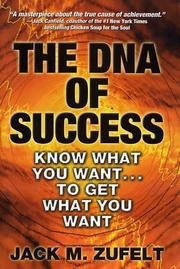
The DNA of Success
Jack M. Zufelt shows how small decisions, daily rituals, and simple decision rules add up into predictable success, using case stories and step-by-step tweaks aimed at real work and home situations.
Best for readers who want clear, testable habits such as daily routines and decision checklists that they can try in work projects or personal goals.
Why it made the list
- Zufelt uses concrete decision rules—like preset criteria for choosing projects—to show how you can avoid indecision and repeat successful choices.
- The book includes case stories of everyday people and managers applying daily rituals and mindset shifts so readers can copy practical behaviors rather than just read theory.
Unlike motivational pep talks, Zufelt breaks success into observable patterns and concrete tweaks you can apply immediately, like changing how you choose tasks and structure your day.
Check current price and availability on Amazon.
Buy Now on Amazon Read more about The DNA of Success#6
Thinking in Pictures: And Other Reports from My Life with Autism
Temple Grandin mixes personal memoir with practical insight to show how her visual, detail-focused thinking shaped her life with autism, her work designing humane livestock handling systems, and her views on animal behavior and sensory perception.
Best for readers who want first-person explanations of autistic cognition, practical examples of design informed by perception, or insight into humane livestock handling from someone who both studies animals and lives wi
Why it made the list
- Grandin describes thinking in mental pictures and explains how that visual mode helped her design curved cattle chutes and other animal-handling equipment.
- She uses concrete scenes from her childhood and laboratory visits to show how sensory sensitivity and pattern spotting affect learning, social life, and creativity.
Unlike purely academic studies, Grandin pairs life stories with hands-on projects like livestock chute design to connect inner experience to real-world problem solving.
Check current price and availability on Amazon.
Buy Now on Amazon Read more about Thinking in Pictures: And Other Reports from My Life with Autism#7
House Thinking: A Room-by-Room Look at How We Live (P.S.) [Paperback] by
Winifred Gallagher walks through rooms of the home to show how lighting, color, , and furniture shape mood, memory, and daily habits using studies and lively anecdotes about real houses.
Best for readers who want practical, evidence-based ideas for improving daily life by changing their living spaces will find clear, room-focused advice here.
Why it made the list
- Gallagher links simple changes like adding natural light or rearranging a chair to measurable effects on mood and productivity, using examples from kitchens, bedrooms, and home offices.
- The book mixes psychological research with vivid stories about specific people’s homes, so you get both study results and clear, room-by-room scenes to imagine.
Unlike books that only offer styling tips, Gallagher emphasizes how environmental details—light, scent, layout—affect thinking, memory, and habits in ordinary homes.
Check current price and availability on Amazon.
Buy Now on Amazon Read more about House Thinking: A Room-by-Room Look at How We Live (P.S.) [Paperback] by#8
Stumbling on happiness
Daniel Gilbert explains how people mispredict their future feelings by showing experiments and everyday examples about imagination, memory, and choice.
Best for readers who want plain, research-based explanations of why we get emotional predictions wrong and how imagination shapes our choices will find this engaging.
Why it made the list
- Gilbert uses clear experiments and stories to show why we overestimate how much future events will change our happiness, like studies comparing anticipated and actual reactions to life events.
- The book digs into how the mind constructs futures and remembers the past, using examples that reveal predictable errors in forecasting emotions and choices.
Unlike technical textbooks, Gilbert mixes lab studies with witty storytelling to show real-world consequences of emotional forecasting errors.
Check current price and availability on Amazon.
Buy Now on Amazon Read more about Stumbling on happiness#9
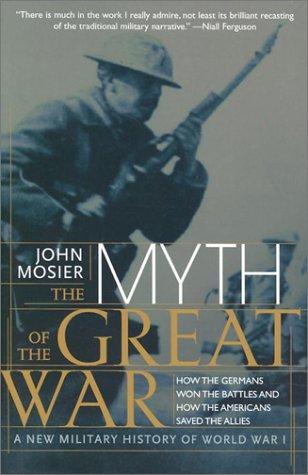
The Myth of the Great War: A New Military History of World War I
John Mosier argues that World War I was decided less by brilliant generals and more by mismanagement, logistics, and industrial firepower. He cuts into set-piece legends like the Somme and Verdun, questions leaders such as Joffre and Haig, and shows how artillery, attrition, and chance shaped the war’s grinding course.
Best for readers who want a hard look at World War I leadership, with focus on staff work, logistics, and battlefield realities instead of heroic myths.
Why it made the list
- Mosier reexamines battles like Verdun and the Somme to show how artillery barrages and supply lines, not grand strategy, drove outcomes on the Western Front.
- He challenges the reputations of commanders such as Haig and Joffre, arguing their decisions led to needless losses and masked the real engines of victory and failure.
Unlike standard campaign overviews, Mosier’s revisionist take centers on operational blunders, munitions, and attrition to overturn familiar stories of genius and turning points.
Check current price and availability on Amazon.
Buy Now on Amazon Read more about The Myth of the Great War: A New Military History of World War I#10
Bear-Proof Investing
Kenneth E. Little’s Bear-Proof Investing addresses the challenge of protecting an investment portfolio when markets turn sharply lower. This 2001 Alpha Books guide focuses on investing through bear-market conditions. Its premise centers on making investment decisions with market declines in mind.
Best for You want an investing book centered on market downturns and portfolio protection | You prefer practical personal-finance guides focused on a specific investing problem
Why it made the list
- Bear-Proof Investing keeps this list balanced with a 288-page commitment and a cleaner edition record.
Pick this if you want something more behavior-and-decision focused than general motivation books.
Check current price and availability on Amazon.
Buy Now on Amazon Read more about Bear-Proof Investing



![Cover image for House Thinking: A Room-by-Room Look at How We Live (P.S.) [Paperback] by](https://covers.openlibrary.org/b/isbn/9780060538804-M.jpg?default=false)


Questions about this guide
How do I choose from Best Psychology Books for Better Thinking?
Start with the first few picks, then use the short notes under each book to match the book to your mood, reading time, and preferred style.
Are these books good to buy as gifts?
Many of these picks work well as gifts because the list favors books with clear appeal, recognizable hooks, and enough information to choose quickly.
What makes a nonfiction book worth buying?
A worthwhile nonfiction book gives you a clear idea, useful examples, and something you can remember or apply after you close it.
Related guides worth comparing
How to use this guide
Who this list is for
- Readers who want better thinking, clearer decisions, and stronger behavior-change books.
- People who want practical psychology, not textbook sprawl or generic inspiration.
- This page leans toward books people can use, apply, or recommend with confidence.
Compare the leading picks
- Origins of the Modern Mind: Three Stages in the Evolution of Culture and Cognition is the better start if you want readers curious how language, myth, and writing systems changed the brain’s problem-solving and memory over human history; The Power of Habit makes more sense if you want practical tools for changing daily behavior will find useful techniques like habit mapping and experimenting with different rewards.
- If you want the lighter commitment, start with The DNA of Success; if you want more depth, move to Origins of the Modern Mind: Three Stages in the Evolution of Culture and Cognition.
- The Burn Rate Diet: The New Mind-Body Treatment for Permanent Weight Control stands apart because it is unlike purely diet-focused books, this title emphasizes managing stress and small daily movements alongside meal choices as part of a single "burn rate" approach.
How we chose
- We keep these guide pages tight at 7 to 15 books so the list stays useful instead of turning into catalog sprawl.
- We favor cleaner editions, stronger reader response, and books with enough substance to justify the click.
- We push down fiction bleed, school editions, placeholder listings, and weak records that do not hold up as recommendations.
- Every page is capped on purpose: if a book does not clearly help the shelf, it stays off the page.