
Best Leadership Books for Managers
This shelf is for managers and team leads who want books with practical lessons on leadership, communication, team performance...
Top pick
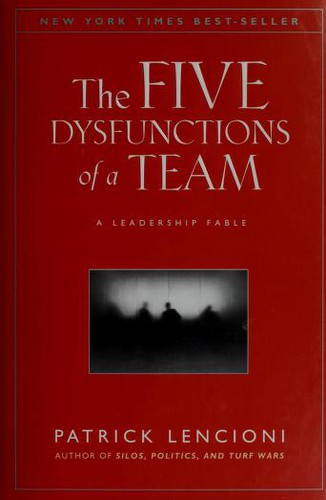
The Five Dysfunctions of a Team
Unlike dry textbooks, Lencioni teaches through a short workplace story that makes the leadership problems and solutions easier to remember and discuss with colleagues.
Check current price and availability on Amazon.
Buy Now on Amazon#2 pick
Heart of a Leader: Insights on the Art of Influence
Unlike books that focus on strategy or metrics, this one centers on interpersonal habits and the leader’s character as the main tool for influence.
Check current price and availability on Amazon.
Buy Now on Amazon#3 pick
Speed of Trust: The One Thing that Changes Everything
Unlike leadership books that stay at the level of vision or values, Speed of Trust ties specific daily actions—like honoring commitments and seeking direct feedback—to measurable business outcomes.
Check current price and availability on Amazon.
Buy Now on Amazon#1
Top pickThe Five Dysfunctions of a Team
Patrick Lencioni tells a short fable about a struggling executive team and then pulls out a clear model of five dysfunctions that block teams: absence of trust, fear of conflict, lack of commitment, avoidance of accountability, and inattention to results.
Best for managers who run or coach small executive teams and want practical language to surface trust issues, set expectations, and improve meeting outcomes will get the most from this book.
Why it made the list
- Lencioni uses a fictional CEO and her leadership team to show how trust issues and hidden conflict play out in real meetings, so you can see the problems in action instead of just reading theory.
- The book gives a simple, memorable five-part names and concrete behaviors tied to each dysfunction, which makes it easy to diagnose problems in your own team conversations and decisions.
Unlike dry textbooks, Lencioni teaches through a short workplace story that makes the leadership problems and solutions easier to remember and discuss with colleagues.
Check current price and availability on Amazon.
Buy Now on Amazon Read more about The Five Dysfunctions of a Team#2
Top pickQuick commitmentHeart of a Leader: Insights on the Art of Influence
Ken Blanchard lays out practical leadership ideas through short chapters and clear examples that focus on serving others and influencing teams with humility and purpose.
Best for managers who want concrete, behavior-focused advice on motivating people and improving team relationships will find the book easy to apply.
Why it made the list
- Blanchard emphasizes servant leadership by showing how leaders put team needs first and build trust through everyday actions and clear communication.
- The book uses simple stories and direct rules to teach how small behaviors—like giving specific praise or delegating responsibility—change team performance and morale.
Unlike books that focus on strategy or metrics, this one centers on interpersonal habits and the leader’s character as the main tool for influence.
Check current price and availability on Amazon.
Buy Now on Amazon Read more about Heart of a Leader: Insights on the Art of Influence#3
Top pickSpeed of Trust: The One Thing that Changes Everything
Speed of Trust argues that trust is a measurable force in organizations and lays out specific behaviors leaders can use to build and repair trust so teams move faster with less oversight.
Best for managers who need step-by-step practices to rebuild credibility, tighten team collaboration, and cut hidden costs from duplicated work and excessive controls will find the book practical.
Why it made the list
- Covey and Merrill give concrete behaviors like keeping commitments, apologizing when wrong, and cascading clear expectations so managers can reduce slow approvals and rework caused by low trust.
- The book uses workplace examples and tools—such as the concept of 'trust accounts' and action steps for restoring credibility—to show how trust impacts efficiency, costs, and employee engagement.
Unlike leadership books that stay at the level of vision or values, Speed of Trust ties specific daily actions—like honoring commitments and seeking direct feedback—to measurable business outcomes.
Check current price and availability on Amazon.
Buy Now on Amazon Read more about Speed of Trust: The One Thing that Changes Everything#4
The Innovator's Dilemma: The Revolutionary Book that Will Change the Way You Do Business (Collins Business Essentials)
Clayton M. Christensen lays out why successful companies often fail when new, simpler technologies arrive, using case studies from disk drives, steel mills, and other industries to show the pattern he calls disruptive innovation.
Best for managers and product leaders who make strategy or investment decisions and want concrete lessons from cases like disk drives and steel on when to protect core businesses and when to explore new markets.
Why it made the list
- Christensen uses the disk drive industry and firms like IBM to show how small, cheaper technologies can upend market leaders, giving managers a clear historical example to study.
- The book explains the organizational choices—such as resource allocation and serving existing customers—that push firms away from disruptive opportunities, which helps leaders spot internal decision traps.
Unlike books that offer general leadership tips, Christensen ties his advice to specific industry case studies and to the idea of 'disruptive innovation' as a repeating market dynamic.
Check current price and availability on Amazon.
Buy Now on Amazon Read more about The Innovator's Dilemma: The Revolutionary Book that Will Change the Way You Do Business (Collins Business Essentials)#5
Radical Candor
Kim Scott draws on her time at Google and Apple to teach managers how to give direct feedback while still showing they care about the person, using examples of one-on-one meetings, team meetings, and coaching conversations.
Best for managers who want practical scripts and meeting habits they can use right away, especially those responsible for developing direct reports at tech or product teams.
Why it made the list
- Scott introduces the idea of 'care personally, challenge directly' and uses a story about a manager who learns to stop sugarcoating criticism to improve a team’s performance.
- The book includes concrete tools like example phrasing for feedback, a weekly one-on-one agenda, and scripts for delivering both praise and correction in real workplace scenes.
Unlike books that focus only on leadership theory, Radical Candor mixes personal stories from Google and Apple with sample language and meeting templates you can copy into real conversations.
Check current price and availability on Amazon.
Buy Now on Amazon Read more about Radical Candor#6
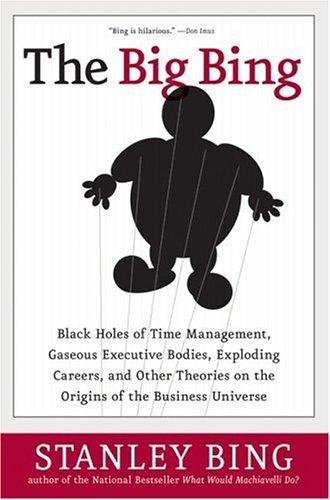
The Big Bing: Black Holes of Time Management, Gaseous Executive Bodies, Exploding Careers, and Other Theories on the Origins of the Business Universe
Stanley Bing skewers corporate life with savage humor, using images like “gaseous executive bodies” and “black holes of time management” to turn meetings, retreats, and performance reviews into absurd spectacles.
Best for readers who want caustic, image-rich satire about real business habits like calendar juggling, management doublespeak, and fragile careers.
Why it made the list
- Bing’s title-specific metaphors — bosses as gas giants and calendars as black holes — make clear how he thinks executive language and time management actually hide chaos in companies.
- The book collects sharp essays that name everyday office rituals — staff meetings, quarterly reviews, corporate retreats — and then shows how those rituals preserve ego and theater more than real leadership.
Instead of charts and prescriptive techniques, Bing uses comic essays and memorable metaphors to explain why power, appearance, and performative leadership dominate corporate life.
Check current price and availability on Amazon.
Buy Now on Amazon Read more about The Big Bing: Black Holes of Time Management, Gaseous Executive Bodies, Exploding Careers, and Other Theories on the Origins of the Business Universe#7
The Culture Code
Daniel Coyle visits places like Navy SEAL Team Six, Pixar, and the San Antonio Spurs to show how trust, candor, and purpose fuel strong groups. He breaks down how small behaviors—like sharing vulnerability, using simple cues, and repeating a clear story—build a culture people want to join.
Best for managers who want concrete habits—like daily check-ins, clear roles, and purpose statements—that make teams safer to speak up and faster to improve.
Why it made the list
- It shows how Navy SEALs use open debriefs and blunt AARs to turn mistakes into learning without blame.
- Pixar’s Braintrust meetings illustrate how honest notes, not titles, guide creative fixes on films like Toy Story and Finding Nemo.
Instead of abstract models, Coyle gives repeatable cues—like the two-line purpose statement and status-mapping—that readers can try the same day.
Check current price and availability on Amazon.
Buy Now on Amazon Read more about The Culture Code#8
Management Information Systems: Organization and Technology
Management Information Systems: Organization and Technology by Kenneth C. Laudon ; Jane Price Laudon stands out here for its specific premise: A comprehensive guide to how organizations use information systems to shape strategy, operations, and decision-making across every functional area.
Best for readers curious about Management Information Systems: Organization and Technology and the specific subject described in the book details.
Why it made the list
- Management Information Systems: Organization and Technology gives readers a concrete hook to judge before clicking: A comprehensive guide to how organizations use information systems to shape strategy, operations, and decision-making across
- Kenneth C. Laudon ; Jane Price Laudon keeps the page from feeling interchangeable by tying the pick to a named writer and subject.
The useful difference is the concrete focus around Management Information Systems: Organization and Technology, not a vague category promise.
Check current price and availability on Amazon.
Buy Now on Amazon Read more about Management Information Systems: Organization and Technology#9
High Output Management
Andrew Grove, former Intel CEO, gives a clear, practice-first manual about running teams, using tools like one-on-ones, performance indicators, and process design to increase real output.
Best for managers who need concrete, repeatable practices to run teams, set priorities, and make decisions that scale work and improve results.
Why it made the list
- Grove teaches specific rituals such as regular one-on-one meetings and task-focused reviews that show how managers can coach and measure people day to day.
- The book explains managerial leverage—how decisions, meetings, and process changes multiply a manager’s impact across engineering and operations at a company like Intel.
Unlike leadership books that focus on inspiration, Grove focuses on operational details—metrics, meeting design, and workflow—drawn from his time leading Intel.
Check current price and availability on Amazon.
Buy Now on Amazon Read more about High Output Management#10
Start with why
Simon Sinek argues that leaders and organizations should start with the question "Why?" and uses examples like Apple, Martin Luther King Jr., and the Wright brothers to show how purpose-driven messages inspire action.
Best for managers who need a simple way to explain purpose to their teams will find Sinek's talks about the "Why" helpful for shaping mission statements and team meetings.
Why it made the list
- Sinek uses the "Golden Circle" model — Why, How, What — to explain why companies such as Apple connect more deeply with customers when they lead with purpose.
- The book studies leaders like Martin Luther King Jr. and businesses like Southwest Airlines to show how clear beliefs can motivate followers and employees.
Unlike manuals about KPI tracking, Sinek emphasizes storytelling and belief, using historical examples and business case studies rather than spreadsheets.
Check current price and availability on Amazon.
Buy Now on Amazon Read more about Start with why




Questions about this guide
How do I choose from Best Leadership Books for Managers?
Start with the first few picks, then use the short notes under each book to match the book to your mood, reading time, and preferred style.
Are these books good to buy as gifts?
Many of these picks work well as gifts because the list favors books with clear appeal, recognizable hooks, and enough information to choose quickly.
How often is this list updated?
UPB refreshes these guide pages as catalog data, availability, and book recommendations change.
Related guides worth comparing
How to use this guide
Who this list is for
- Readers buying for work, leadership, management, or sharper day-to-day decisions.
- People who want practical business books, not vague motivation or recycled filler.
- This page leans toward books people can use, apply, or recommend with confidence.
Compare the leading picks
- The Five Dysfunctions of a Team is the better start if you want managers who run or coach small executive teams and want practical language to surface trust issues, set expectations, and improve meeting outcomes will get the most from this book; Heart of a Leader: Insights on the Art of Influence makes more sense if you want managers who want concrete, behavior-focused advice on motivating people and improving team relationships will find the book easy to apply.
- If you want the lighter commitment, start with Heart of a Leader: Insights on the Art of Influence; if you want more depth, move to Management Information Systems: Organization and Technology.
- Speed of Trust: The One Thing that Changes Everything stands apart because it is unlike leadership books that stay at the level of vision or values, Speed of Trust ties specific daily actions—like honoring commitments and seeking direct feedback—to measurable business outcomes.
How we chose
- We keep these guide pages tight at 7 to 15 books so the list stays useful instead of turning into catalog sprawl.
- We favor cleaner editions, stronger reader response, and books with enough substance to justify the click.
- We push down fiction bleed, school editions, placeholder listings, and weak records that do not hold up as recommendations.
- Every page is capped on purpose: if a book does not clearly help the shelf, it stays off the page.