
Best Personal Finance Books
This page is for readers who want finance books with clear real-world use: saving, investing, budgeting, debt, and long-term mo...
Top pick
The Millionaire Next Door: The Surprising Secrets of America's Wealthy
Unlike memoirs or market guides, this book emphasizes household behavior and demographic patterns—who becomes wealthy and why—rather than investment timing or personal therapy about money.
Check current price and availability on Amazon.
Buy Now on Amazon#2 pick
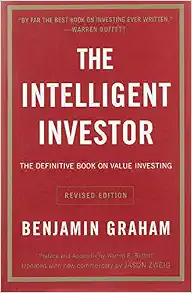
The Intelligent Investor: A Book of Practical Counsel
Unlike quick personal finance primers, Graham spends chapters on case examples and thought experiments—such as comparing bond-like preferred shares to common stock—to teach how to think about risk and price.
Check current price and availability on Amazon.
Buy Now on Amazon#3 pick
I will teach you to be rich
Unlike dry, number-heavy guides, Sethi centers on changing habits and shows practical daily systems—automation and scripted negotiations—rather than complex spreadsheets.
Check current price and availability on Amazon.
Buy Now on Amazon#1
Top pickThe Millionaire Next Door: The Surprising Secrets of America's Wealthy
Researchers Thomas J. Stanley and William D. Danko share interviews and survey data about everyday Americans who quietly build wealth by living frugally, prioritizing savings, and avoiding flashy consumption.
Best for readers who want research-backed portraits of self-made millionaires and practical habits for living below your means.
Why it made the list
- The book profiles 'prodigious accumulators of wealth' who drive modest cars, live in ordinary neighborhoods, and spend on assets rather than status items, revealing specific lifestyle patterns behind their net worth.
- Stanley and Danko turn their findings into concrete rules like tracking net worth, minimizing consumer debt, and choosing professions with high savings capacity, giving clear, habit-based guidance rooted in their research.
Unlike memoirs or market guides, this book emphasizes household behavior and demographic patterns—who becomes wealthy and why—rather than investment timing or personal therapy about money.
Check current price and availability on Amazon.
Buy Now on Amazon Read more about The Millionaire Next Door: The Surprising Secrets of America's Wealthy#2
Top pickThe Intelligent Investor: A Book of Practical Counsel
Benjamin Graham’s The Intelligent Investor teaches long-term value investing through ideas like margin of safety, Mr. Market as a mood-driven buyer, and the contrast between defensive and enterprising investors.
Best for readers who want concrete methods for valuing stocks and deciding between a passive, low-maintenance portfolio and a more active, research-driven approach will find Graham’s distinctions useful.
Why it made the list
- Graham’s concept of Mr. Market turns the stock market into a character whose daily mood swings show why investors should ignore short-term prices and focus on a company’s intrinsic value.
- The book lays out the margin-of-safety rule, explaining how to buy securities at a sufficient discount to reduce risk when estimates of value are wrong.
Unlike quick personal finance primers, Graham spends chapters on case examples and thought experiments—such as comparing bond-like preferred shares to common stock—to teach how to think about risk and price.
Check current price and availability on Amazon.
Buy Now on Amazon Read more about The Intelligent Investor: A Book of Practical Counsel#3
Top pickI will teach you to be rich
Ramit Sethi gives a six-week, behavior-first plan for handling money, with clear steps on automating savings, cutting wasteful spending, and starting to invest without overcomplicating things.
Best for readers who want a blunt, step-by-step playbook to set up automatic saving and simple investing and who like direct, conversational advice.
Why it made the list
- Sethi’s focus on automation shows you how to route paychecks into accounts and investments so saving happens without daily decisions.
- The book includes concrete scripts and tactics for negotiating things like credit card fees and salary, so you can practice real conversations rather than abstract tips.
Unlike dry, number-heavy guides, Sethi centers on changing habits and shows practical daily systems—automation and scripted negotiations—rather than complex spreadsheets.
Check current price and availability on Amazon.
Buy Now on Amazon Read more about I will teach you to be rich#4
A random walk down Wall Street
Malkiel lays out the efficient-market idea and walks through market history, bubbles, and common investing strategies to argue that simple, low-cost index funds usually beat active stock picking.
Best for readers who want a calm, evidence-driven argument for low-cost index investing and a tour of market history and common strategies.
Why it made the list
- Malkiel explains the efficient-market hypothesis and uses historical episodes like stock market bubbles to show why beating the market consistently is so hard.
- The book surveys many investing approaches—technical charts, fundamental analysis, and model portfolios—and then makes a clear, practical case for passive index funds using examples and data.
Unlike anecdote-driven memoirs, Malkiel combines historical episodes with explanations of investment theories to favor a simple, low-fee approach.
Check current price and availability on Amazon.
Buy Now on Amazon Read more about A random walk down Wall Street#5
The Big Money: Volume Three of the U.S.A. Trilogy
John Dos Passos’s The Big Money follows characters like Joe Williams through 1920s and 1930s America, mixing newspaper clippings, fictional biographies, and stream-of-consciousness scenes to show how finance, industry, and mass media reshape ordinary lives.
Best for readers who want a literary view of American capitalism and want to see how 1920s financial culture, advertising, and corporate ambition changed everyday people.
Why it made the list
- Dos Passos uses the character Joe Williams and his rise and fall in banking and real estate to show how speculation and modern business practices affect one person's fate.
- The book’s use of real newspaper headlines, newsreel fragments, and the ‘Camera Eye’ sections gives a direct sense of how publicity and mass media drive public opinion about stock markets and corporate power.
Unlike practical money guides, The Big Money treats banks, speculators, advertisers, and journalists as characters and forces, showing social consequences rather than offering financial rules.
Check current price and availability on Amazon.
Buy Now on Amazon Read more about The Big Money: Volume Three of the U.S.A. Trilogy#6
THE SIMPLE PATH TO WEALTH
JL Collins lays out a plainspoken plan built around low-cost, broad-market index funds like VTSAX, a cash emergency cushion, and a long-term withdrawal approach for retirement freedom.
Best for readers who want a no-nonsense, buy-and-hold approach centered on Vanguard total-market funds and simple withdrawal rules for financial independence will get the most from Collins’s advice.
Why it made the list
- Collins explains why VTSAX and total-market index funds outperform most active strategies for long-term investors, using simple examples and real account-style math.
- The book gives a clear, practical rule about keeping an emergency cash cushion and avoiding panic selling during market downturns, drawn from Collins’s own investment experience.
Unlike investing books that teach frequent trading, Collins focuses on passive index funds such as VTSAX and on behavioral rules to keep investors from selling at the wrong time.
Check current price and availability on Amazon.
Buy Now on Amazon Read more about THE SIMPLE PATH TO WEALTH#7
Quick commitmentYour Money or Your Life
Joe Dominguez and Vicki Robin give a step-by-step program that treats money as traded life energy, teaching you to track every dollar, cut spending that doesn’t fit your values, and reclaim time and purpose.
Best for readers who want a practical, values-focused overhaul of spending and are willing to keep detailed daily spending logs and do the workbook exercises.
Why it made the list
- The book’s signature exercise turns your monthly expenses into a true hourly wage so you can see how much life energy each purchase costs.
- Dominguez and Robin include daily tracking worksheets and concrete steps for reducing expenses and building a value-driven budget, not just abstract advice.
Unlike investment-first books, this one centers on aligning spending with personal values and measuring money in terms of time and life energy.
Check current price and availability on Amazon.
Buy Now on Amazon Read more about Your Money or Your Life#8
All Your Worth: The Ultimate Lifetime Money Plan
Elizabeth Warren and Amelia Warren Tyagi lay out a simple lifetime money plan that splits your income into needs, wants, and savings so you can reduce debt and build long-term goals.
Best for people who want a clear, rules-based household budget and a steady way to divide income between immediate expenses and future savings.
Why it made the list
- The book’s three-part allocation—needs, wants, savings—is a concrete budgeting rule you can apply to monthly paychecks or irregular income.
- Warren and Tyagi focus on balancing debt reduction with saving, offering practical steps to shrink consumer debt while still funding future goals.
Unlike technical investing books, this title centers on a lifetime allocation method and household spending choices rather than market timing.
Check current price and availability on Amazon.
Buy Now on Amazon Read more about All Your Worth: The Ultimate Lifetime Money Plan#9
Quick commitmentA Woman's Book of Money and Spiritual Vision: Putting Your Financial Values into Spiritual Perspective
Rosemary Williams and Joanne Kabak connect money decisions with spiritual values in this focused guide for women. A Woman's Book of Money and Spiritual Vision examines how financial values can be understood through a spiritual perspective. Its 192 pages center the relationship between money, meaning, and personal priorities.
Best for You want to think about money through ethics, meaning, and spiritual perspective | You prefer reflective personal-finance reading over technical investing instruction
Why it made the list
- A Woman's Book of Money and Spiritual Vision: Putting Your Financial Values into Spiritual Perspective keeps this list balanced with a 192-page commitment and a cleaner edition record.
Pick this if you want something more concrete and money-specific than general success books.
Check current price and availability on Amazon.
Buy Now on Amazon Read more about A Woman's Book of Money and Spiritual Vision: Putting Your Financial Values into Spiritual Perspective#10
An Empire of Wealth
John Steele Gordon traces American capitalism from colonial trade and the rise of merchants through the creation of banks, railroads, stock markets, and 20th-century financiers, showing how money and institutions shaped U.S. politics and society up to the early 2000s.
Best for readers who want a readable, narrative history of U.S. finance that connects merchants, railroads, and Wall Street to political change.
Why it made the list
- Gordon uses lively anecdotes about figures like rail barons and early bankers to explain how railroads and bank charters drove national expansion and investment patterns.
- The book follows concrete institutions — the New York Stock Exchange, national banks, and corporate trusts — to show how legal and financial innovations built concentrated corporate power.
Unlike dense economic textbooks, Gordon emphasizes stories about entrepreneurs, banks, and financial institutions to explain how American wealth was created.
Check current price and availability on Amazon.
Buy Now on Amazon Read more about An Empire of Wealth



Questions about this guide
How do I choose from Best Personal Finance Books?
Start with the first few picks, then use the short notes under each book to match the book to your mood, reading time, and preferred style.
Are these books good to buy as gifts?
Many of these picks work well as gifts because the list favors books with clear appeal, recognizable hooks, and enough information to choose quickly.
How often is this list updated?
UPB refreshes these guide pages as catalog data, availability, and book recommendations change.
Related guides worth comparing
How to use this guide
Who this list is for
- Readers who want a tighter shelf around saving, investing, debt, and long-term money decisions.
- People trying to pick a finance book that feels useful now, not just impressive on a list.
- This page leans toward books people can use, apply, or recommend with confidence.
Compare the leading picks
- The Millionaire Next Door: The Surprising Secrets of America's Wealthy is the better start if you want best for readers who want research-backed portraits of self-made millionaires and practical habits for living below your means; The Intelligent Investor: A Book of Practical Counsel makes more sense if you want concrete methods for valuing stocks and deciding between a passive, low-maintenance portfolio and a more active, research-driven approach will find Graham’s distinctions useful.
- If you want the lighter commitment, start with Your Money or Your Life; if you want more depth, move to The Intelligent Investor: A Book of Practical Counsel.
- I will teach you to be rich stands apart because it is unlike dry, number-heavy guides, Sethi centers on changing habits and shows practical daily systems—automation and scripted negotiations—rather than complex spreadsheets.
How we chose
- We keep these guide pages tight at 7 to 15 books so the list stays useful instead of turning into catalog sprawl.
- We favor cleaner editions, stronger reader response, and books with enough substance to justify the click.
- We push down fiction bleed, school editions, placeholder listings, and weak records that do not hold up as recommendations.
- Every page is capped on purpose: if a book does not clearly help the shelf, it stays off the page.